
Understanding Austin’s Changing Housing Landscape
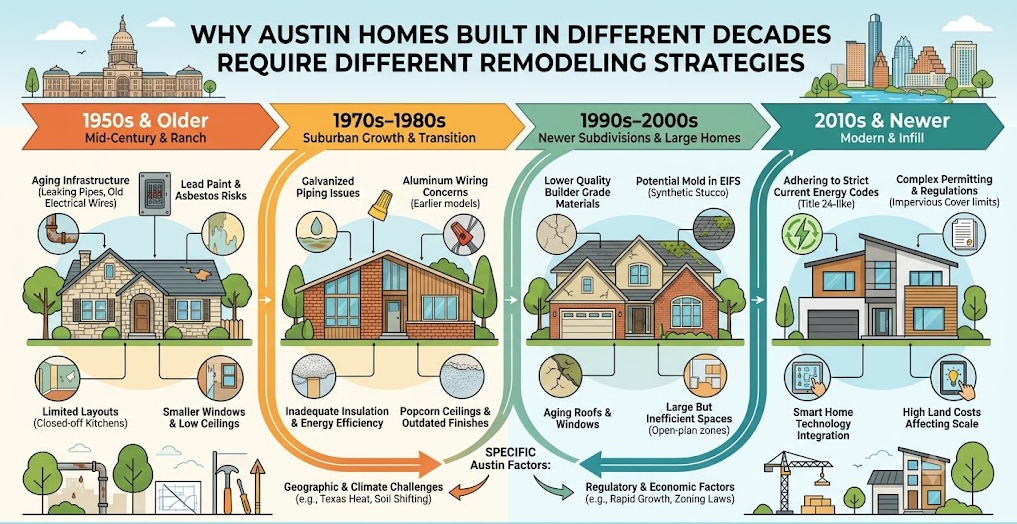
Austin homes reflect decades of changing architecture, construction practices, materials, lifestyles, and building standards. A house constructed in the 1970s can have completely different structural characteristics from one built in the 1990s or 2010s. These differences influence how kitchens, bathrooms, living areas, exterior spaces, electrical systems, plumbing, and insulation should be remodeled. Our approach begins with understanding when and how a property was originally constructed before recommending major improvements. This helps us identify opportunities while also recognizing limitations that may not be visible during a simple walkthrough. Renaissance Contracting uses this foundation to develop remodeling strategies that respect the home’s existing character while improving its functionality.
Remodeling Older Austin Homes
Homes built several decades ago often contain layouts and construction details that reflect an earlier way of living. Smaller kitchens, separated living spaces, limited storage, older windows, and closed floor plans are common characteristics in many older Austin properties. These homes may also contain aging plumbing, electrical systems, insulation, roofing components, and structural materials that require closer evaluation before remodeling begins. Opening walls during a renovation can reveal conditions that were not apparent during the initial design discussion. We therefore consider both the visible improvements and the hidden systems that support the home. A successful renovation should improve modern comfort without overlooking the underlying infrastructure that keeps an older property functional.
Remodeling Homes From the 1970s
Many Austin homes constructed during the 1970s feature compartmentalized layouts, distinctive architectural details, and materials that differ considerably from current construction preferences. Remodeling these properties may involve opening interior spaces while preserving structural walls, ceiling characteristics, or other elements that contribute to the home’s original identity. Kitchens and bathrooms frequently require comprehensive updates because fixtures, cabinetry, ventilation, and plumbing layouts may be outdated. Electrical capacity can also become an important consideration when adding modern appliances, lighting, technology, and high demand equipment. We examine how these systems interact before deciding how extensively the existing layout should be changed. This allows the renovation to deliver modern functionality without treating every older component as something that automatically needs replacement.
Remodeling Homes From the 1980s
The 1980s introduced different architectural trends, material choices, and floor plans that can influence today’s remodeling decisions. Some Austin homes from this period have larger kitchens and more open living areas, while others contain design features that now make rooms feel visually divided. Remodeling may focus on improving circulation, updating finishes, increasing natural light, and creating better connections between frequently used spaces. At the same time, original windows, doors, cabinetry, flooring, plumbing fixtures, and mechanical systems may need evaluation before they are incorporated into a new design. We consider which existing elements can be retained and which should be replaced based on performance, condition, and compatibility with the renovation. The objective is to create a cohesive home rather than simply layering contemporary finishes over an outdated foundation.
Remodeling Homes From the 1990s
Homes built during the 1990s often present a different remodeling opportunity because many were designed with features that remain relatively familiar to modern homeowners. Larger kitchens, dedicated dining areas, spacious primary bedrooms, and more integrated living arrangements became common in many properties during this period. However, finishes, cabinetry profiles, lighting arrangements, flooring, and bathroom designs can make these homes feel dated even when their basic layouts remain practical. Remodeling can therefore concentrate on strategic upgrades instead of completely rebuilding every room. We assess whether the existing floor plan can support modern expectations before recommending structural changes. This approach can preserve useful space while directing investment toward improvements that meaningfully change the home’s appearance and usability.
Remodeling Homes Built in the 2000s
Austin homes constructed during the 2000s frequently have layouts that are closer to current residential expectations, but their materials and design details may still require modernization. Builder grade cabinetry, standardized fixtures, dated flooring, limited lighting plans, and older appliances can make otherwise functional interiors feel less contemporary. These properties may benefit from targeted kitchen renovations, bathroom improvements, flooring replacements, lighting upgrades, and interior finish changes. Larger structural modifications may still be appropriate when homeowners want to improve entertaining areas or create stronger connections between indoor and outdoor spaces. We determine whether the existing construction provides a suitable foundation for these changes before removing walls or relocating major systems. The remodeling strategy can then focus on maximizing the home’s existing strengths while addressing the details that have become outdated.
Remodeling Newer Austin Homes
Newer homes should not automatically be treated as simple remodeling projects because modern construction can still contain design limitations. A relatively recent property may have an open layout but lack sufficient storage, customized spaces, architectural character, or finishes that reflect the owner’s preferences. Mechanical systems, electrical infrastructure, windows, insulation, and structural components may also be significantly different from those found in older properties. Remodeling decisions therefore need to account for existing construction methods and the potential complexity of modifying newer assemblies. We look at the relationship between the original construction and the homeowner’s goals before determining how much intervention is necessary. This helps prevent unnecessary demolition while creating opportunities for meaningful improvements.
Electrical Systems and Modern Remodeling Needs
Electrical requirements have changed substantially as Austin households have added more appliances, electronics, lighting, entertainment systems, security equipment, and charging technology. An older home may have an electrical configuration that was appropriate when it was constructed but is less suitable for current household demands. Remodeling provides an opportunity to evaluate circuits, outlets, lighting locations, panels, and other electrical considerations as part of a broader renovation. Older wiring or insufficient capacity can affect where new appliances and fixtures can be installed. We coordinate remodeling decisions around these requirements rather than treating electrical work as an afterthought. Addressing infrastructure alongside visible improvements can create a safer and more practical result for the finished home.
Plumbing and Water Management Considerations
Plumbing is another area where the age of an Austin home can significantly influence remodeling decisions. Older properties may contain plumbing configurations, fixtures, supply lines, drainage arrangements, or materials that differ from those used in newer construction. Moving a kitchen sink or bathroom shower can therefore involve more than selecting a new fixture and changing the room’s appearance. The existing plumbing route, access points, drainage requirements, and surrounding construction all need to be considered during planning. We evaluate these factors before finalizing layouts so that design decisions remain practical from an installation perspective. This becomes particularly important when a renovation involves relocating bathrooms, expanding kitchens, or adding new plumbing fixtures.
Energy Efficiency and Building Performance
Different generations of Austin homes were constructed under different expectations for insulation, windows, air sealing, ventilation, and energy performance. Older properties can sometimes provide significant opportunities for improvement through upgraded insulation, better windows, improved sealing, efficient lighting, and modern mechanical equipment. Newer homes may already include some of these features but can still have areas where performance can be improved. Remodeling creates an opportunity to consider how individual upgrades affect comfort throughout the property rather than treating each improvement as an isolated feature. We consider the home’s existing construction when determining which upgrades are appropriate for the renovation. A thoughtful strategy can improve indoor comfort while making the updated spaces more suitable for year round Austin living.
Preserving Character While Adding Modern Function
One of the most important considerations in remodeling an older Austin property is deciding what should remain. Original architectural details can contribute character and distinguish an established home from newer construction. Trim, ceiling details, masonry, woodwork, doors, windows, and distinctive room proportions may sometimes be incorporated into a modern renovation rather than removed. At the same time, preserving every existing feature may prevent the home from achieving the functionality the homeowner needs. We evaluate the relationship between original character and modern requirements before deciding which elements should be retained, modified, or replaced. Renaissance Contracting works toward renovations where updated spaces feel intentional rather than disconnected from the home’s original architecture.
Designing Around the Home’s Existing Structure
Every remodeling project begins with physical limitations that are specific to the property. Load bearing walls, roof structures, foundation conditions, plumbing routes, electrical pathways, ceiling heights, windows, doors, and existing room dimensions can all affect what changes are practical. Two homes with similar floor plans can require very different construction approaches because their structural systems may not be identical. Understanding these conditions early can reduce surprises during construction and make the design process more precise. We work with the existing structure rather than assuming that every desired change can be completed in the same way across different properties. This property specific approach helps homeowners make informed decisions about scope, materials, layout, and investment.
Choosing the Right Remodeling Strategy for Your Austin Home
The best remodeling strategy depends on the home’s age, construction methods, current condition, existing layout, architectural character, and the homeowner’s long term goals. A 1970s property may require infrastructure improvements before its interior transformation can be completed, while a 2000s home may need more targeted design updates. A newer property may offer a strong structural foundation but still require customized changes to better match the owner’s lifestyle. Understanding these differences allows homeowners to prioritize improvements rather than applying the same renovation formula to every property. Our remodeling process considers the existing home first and then develops improvements around its specific opportunities and constraints. Renaissance Contracting brings this property focused perspective to Austin remodeling projects so that each renovation is planned around the home rather than forced into a generic design approach.
Planning a Remodel in Austin?
Renaissance Contracting has helped Greater Austin homeowners since 2006 with kitchen and bathroom remodels, room additions, flooring, cabinets and whole-home renovations. We serve Austin, Cedar Park, Round Rock, Georgetown, Leander, Pflugerville and Hutto.
See our kitchen remodels, bathroom remodels, room additions, or our full list of remodeling services.
Call (512) 691-9047 or request your free estimate today.
Areas we serve: Austin · Round Rock · Georgetown · Cedar Park · Leander · Pflugerville