

Understanding Austin Bathroom Moisture Challenges
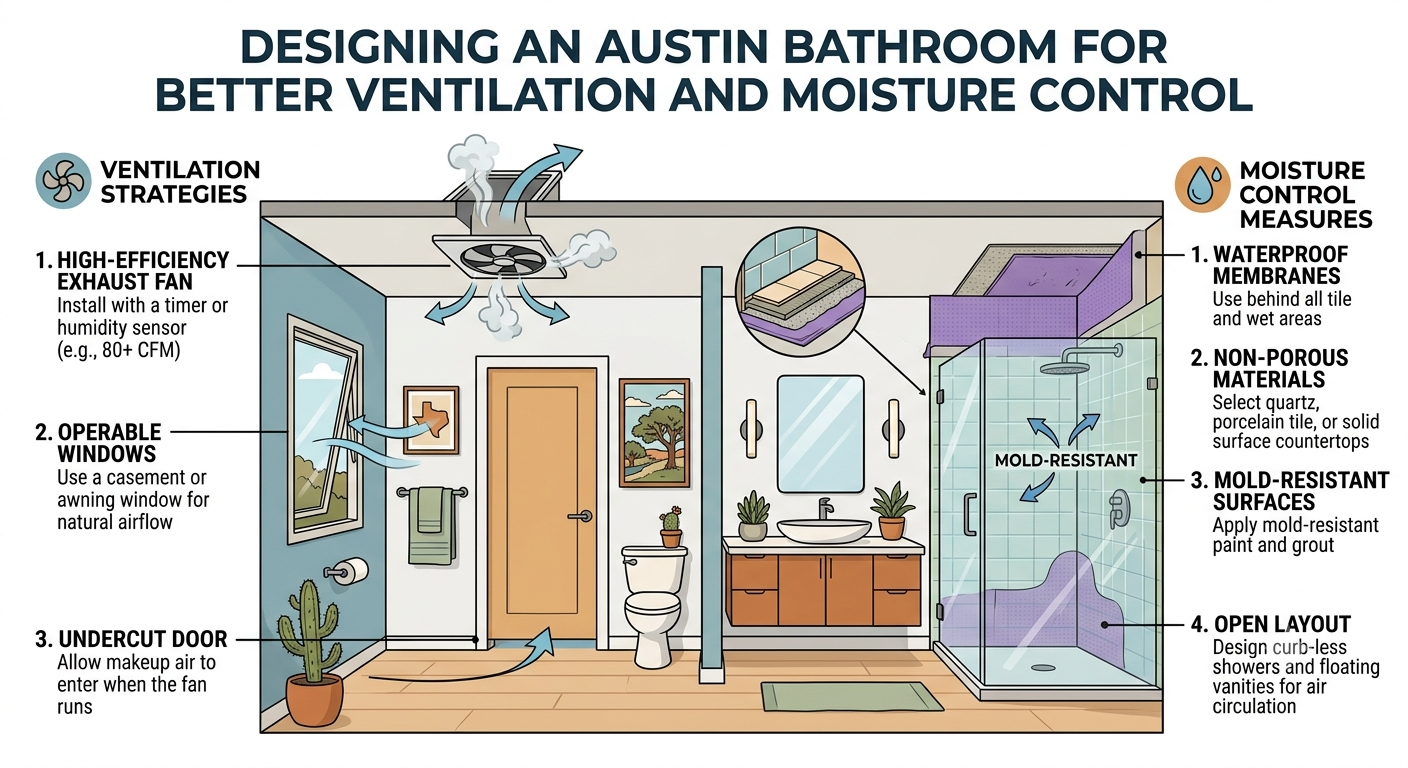
Designing a bathroom in Austin requires careful attention to ventilation because the region experiences warm temperatures and periods of high humidity. Moisture from showers, baths, and sinks can quickly increase indoor humidity when it cannot escape efficiently. Poor moisture control may contribute to condensation, unpleasant odors, peeling finishes, and damage to materials over time. A well-designed bathroom should therefore manage moisture from the moment it is generated rather than relying only on occasional cleaning. We consider airflow, surface materials, room configuration, and exhaust capacity when developing practical bathroom designs. These elements work together to create a more comfortable and durable bathroom environment.
Start With an Effective Exhaust Strategy
A properly selected exhaust fan is one of the most important components of bathroom ventilation. The fan should be appropriately sized for the bathroom so that humid air can be removed efficiently after showers and baths. Installing the exhaust point near the primary moisture source can help capture humid air before it spreads throughout the room. The exhaust system should also discharge air outdoors rather than simply moving moisture into another part of the building. We evaluate the bathroom layout and ventilation requirements before determining the most practical position for an exhaust fan. A thoughtful ventilation strategy can significantly improve indoor comfort while helping protect the surrounding structure.
Consider the Bathroom Layout
Bathroom layout has a direct influence on how moisture moves through the space. A shower enclosed tightly within a corner may require particularly careful exhaust placement because humid air can accumulate around walls and ceilings. Positioning ventilation near the shower zone can help reduce the amount of moisture that reaches other parts of the bathroom. Door placement, ceiling height, windows, and the location of fixtures can also affect natural and mechanical airflow. We look at these relationships when planning bathroom renovations so that ventilation is incorporated into the overall design rather than added as an afterthought. A carefully planned layout can make moisture management more effective without compromising the appearance or functionality of the room.
Use Moisture Resistant Wall Materials
Wall materials should be selected with regular exposure to humidity and water in mind. Porcelain and ceramic tile can provide durable surfaces around showers while making routine cleaning easier. Properly installed waterproofing behind tiled areas is equally important because surface tile alone does not prevent moisture from reaching the underlying structure. Grout, sealants, membranes, and joints should all be considered as part of a complete moisture management approach. Our remodeling process considers both visible finishes and the protective layers beneath them when bathroom surfaces are being upgraded. This approach helps create bathrooms that can withstand repeated exposure to moisture while maintaining their finished appearance.
Pay Attention to Ceiling Design
Bathroom ceilings are frequently exposed to warm, humid air that rises during showers. Without adequate ventilation, condensation can accumulate on the ceiling and potentially affect paint, drywall, and other finishes. Moisture resistant ceiling products and bathroom appropriate coatings can provide additional protection in areas that experience frequent humidity. The ceiling should also work with the exhaust system so that humid air has a clear path toward the ventilation outlet. We consider ceiling materials, fan placement, lighting, and overall room proportions when developing a renovation plan. Combining suitable finishes with effective ventilation can help reduce moisture related deterioration above the bathroom.
Plan Airflow Around the Shower
The shower area typically generates the greatest concentration of humidity within a bathroom. Designing airflow around this zone can help remove moisture before it travels across mirrors, ceilings, walls, and adjacent rooms. Glass shower enclosures can be attractive and functional, but their configuration should not unintentionally restrict the movement of humid air toward the exhaust point. A small clearance beneath a bathroom door can also help provide replacement air when the exhaust fan is operating. We assess the relationship between the shower enclosure, door, ceiling, and exhaust location during the design process. Better airflow planning can improve ventilation performance without requiring major changes to the bathroom footprint.
Choose Flooring With Moisture in Mind
Bathroom flooring needs to handle both surface water and repeated exposure to humid conditions. Porcelain and ceramic tile are commonly used because they provide durable surfaces when correctly installed and maintained. The subfloor and waterproofing system beneath the finished flooring are also important because water can penetrate through poorly protected joints or damaged areas. Proper slopes around wet zones can help direct water toward the intended drainage points rather than allowing it to remain on the floor. We pay attention to both the finished flooring and the supporting layers when planning bathroom improvements. This creates a more complete approach to water management and long term bathroom performance.
Control Condensation on Mirrors and Fixtures
Condensation on mirrors is a visible indication that warm humid air is accumulating inside the bathroom. While some condensation is expected after a hot shower, excessive moisture can indicate insufficient ventilation or poor airflow. An appropriately positioned exhaust fan can help reduce humidity before it settles heavily on reflective surfaces and other cool materials. Heated mirror systems can provide another option for reducing condensation in bathrooms where this feature suits the overall design. We can incorporate practical ventilation and fixture considerations into the renovation plan to support a more comfortable space. Managing condensation can also help keep the bathroom looking cleaner between regular maintenance sessions.
Improve Natural Air Movement
Windows can provide useful natural ventilation when they are appropriately positioned and practical for the property. Opening a bathroom window after a shower may allow humid air to escape while introducing drier outdoor air into the room. However, natural ventilation should generally complement rather than replace an effective mechanical exhaust system. Austin weather conditions can vary, so relying exclusively on an open window may not provide consistent moisture control throughout the year. We consider available windows, exterior walls, privacy requirements, and mechanical ventilation when evaluating the complete airflow strategy. Combining natural and mechanical ventilation can provide greater flexibility for everyday bathroom use.
Protect Cabinets and Wood Components
Bathroom cabinetry can experience moisture exposure from both direct splashes and humid air. Choosing suitable materials, finishes, hardware, and installation methods can help cabinets remain attractive in a humid environment. Adequate ventilation also reduces the amount of moisture that repeatedly settles around cabinet surfaces and enclosed storage areas. Doors and drawers should have enough clearance to operate comfortably without creating unnecessary areas where moisture can remain trapped. We consider storage placement and material selection alongside ventilation when designing bathroom renovations. This helps ensure that functional storage does not become a weak point in the overall moisture control strategy.
Think About Austin Climate Conditions
Austin bathrooms need to be designed with the local climate and everyday household habits in mind. Warm weather can increase indoor moisture loads, while periods of elevated outdoor humidity may affect how quickly moisture leaves the building naturally. Air conditioning can help manage indoor humidity, but it does not eliminate the need for dedicated bathroom exhaust ventilation. A bathroom should therefore be designed to address moisture generated specifically by showers, baths, and other water using activities. Renaissance Contracting considers local conditions when developing renovation solutions intended for Austin homes. Climate responsive planning can make a bathroom more comfortable while supporting the durability of its finishes and fixtures.
Maintain Ventilation After Remodeling
Even a well-designed bathroom needs regular maintenance to keep its ventilation system working effectively. Exhaust fan grilles can collect dust and debris that gradually restrict airflow and reduce performance. Homeowners should periodically clean the fan and check whether humid air is being removed efficiently during and after showers. Any unusual noise, weak airflow, persistent condensation, or recurring odors may indicate that the ventilation system needs inspection. We recommend treating ventilation maintenance as part of routine bathroom care rather than waiting for visible moisture damage to appear. Consistent maintenance helps preserve the performance of the bathroom design over the long term.
Create a More Durable Austin Bathroom
Better ventilation and moisture control should be considered from the beginning of any bathroom remodeling project. Exhaust capacity, airflow, waterproofing, surface materials, ceiling finishes, flooring, windows, and fixture placement all contribute to the overall performance of the room. Addressing these details together can reduce opportunities for moisture to accumulate in vulnerable areas. A comfortable bathroom should not only look attractive but also perform reliably under everyday conditions. Renaissance Contracting approaches bathroom remodeling by considering both design goals and the practical requirements of moisture management. With thoughtful planning, an Austin bathroom can provide a comfortable, functional, and durable environment for years to come.
Planning a Remodel in Austin?
Renaissance Contracting has helped Greater Austin homeowners since 2006 with kitchen and bathroom remodels, room additions, flooring, cabinets and whole-home renovations. We serve Austin, Cedar Park, Round Rock, Georgetown, Leander, Pflugerville and Hutto.
See our kitchen remodels, bathroom remodels, room additions, or our full list of remodeling services.
Call (512) 691-9047 or request your free estimate today.
Areas we serve: Austin · Round Rock · Georgetown · Cedar Park · Leander · Pflugerville
Planning a bathroom remodel? See our bathroom remodeling services in Austin or call (512) 691-9047 for a free estimate.